
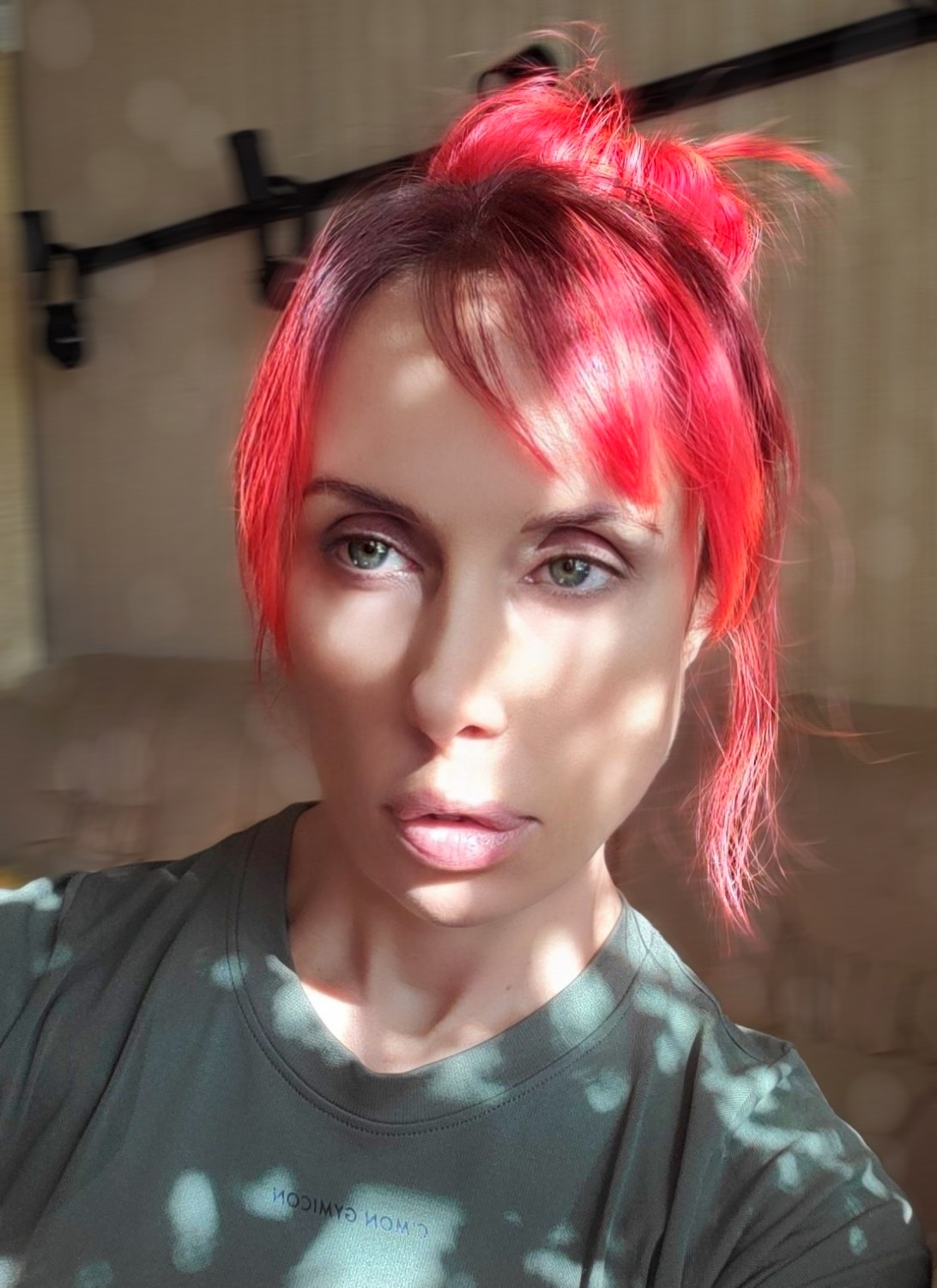
Hello, I am Ilami Yasna.
I am a doctoral candidate at the Polish Academy of Sciences and an affiliated external researcher at the University of Warsaw. My scholarly trajectory began in philosophy in Eastern Ukraine and was interrupted by the Russia’s invasion in 2014. It continued in Kyiv and was interrupted again by the full-scale war in 2022. I have relocated to Europe with sequential fellowships by universities of Vienna and Munich and finally enrolled in a sociology doctorate in Poland. My war experience has inspired my doctoral research on deliberate collective staying under massive and durable disruption. To approach this as an insider, I have returned to Ukraine, while remaining affiliated in both Polish institutions and maintaining broad international collaboration. I believe this ambivalent state of being both distanced and included gives me a unique research perspective: close enough to see what is happening, distant enough to study it.
My research develops the Stayer – a conceptual figure grounded in the sociological tradition of the Stranger and portable across diverse disrupted contexts. My ongoing doctoral study is conceived as the first instantiation of this framework and employs phenomenological sociology of knowledge to examine civilian wartime staying through public diaries. In parallel, I am conducting a related study on staying under occupation (supported by the IWM Documenting Ukraine program), am developing an open-access database of Ukrainian wartime diaries (with the Herder University LivArch fellowship), and am elaborating on the qualitative methodological framework for analyzing such data (with University of Regensburg's Denkraum Ukraine fellowship).
My broader interests revolve around marginality and liminality, anomalies and otherness, risk and extreme experiences, breaches and ruptures – simply put, all about boundaries, crossroads, and thresholds, where the most insightful things in our lives happen. I approach these issues phenomenologically - as events that that interrupt the routine and habitual order of things and, thus, change and shape the way we make sense of the world and ourselves. Empirically, I analyze these through qualitative and interpretive methods. When I am not buried in research, you will find me running, (motor)cycling, diving, ice-swimming, traveling, or inventing other ways to test the edges of my mind and body.
For more information about me and my work:
- Take a look at my CV (PDF)
- Feel free to contact me via email
- Browse the Zenodo repository of the Stayer project (PDFs of all my publications and other citable documents: conference presentations and talks transcripts, preprints, working reports, data sets and other results of my ongoing work)
- Read my personal journal Stay.in.ua; it documents staying under war from an insider’s perspective
- You can also find me on academic and social platforms: